





Common signs of pain and discomfort in pets

Changes in Activity Levels and sleeping patterns

Appetite Changes

Grooming Habits

Vocalisation

Limping

Restlessness

Changes in Posture

Behavioural Changes

Hiding

Reluctance to Jump/Play
Why managing pain is important and how to do it.
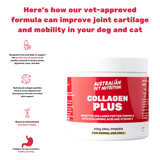
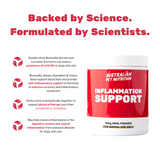
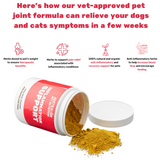
Supporting joint health in pets offers numerous benefits, primarily enhancing their mobility, comfort, and overall quality of life, especially as they age.
By maintaining healthy joints, pets can enjoy increased activity levels, reduced pain and inflammation, and a longer, more fulfilling life. Pets can need joint support at any age, but in particular when managing an injury, after surgery, when growing from puppy to adulthood and in their senior years.
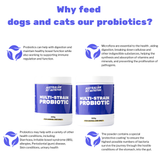
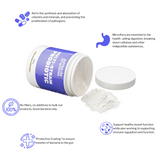
Answer: Gut health and pain are deeply interconnected through the “gut–brain–immune axis.” A healthy gut doesn’t just aid digestion; it influences inflammation, nerve sensitivity, and how the brain perceives pain.
1. The gut and brain constantly “talk” to each other
The gut–brain axis links the digestive tract, nervous system, and brain via the vagus nerve and signaling molecules.
When the gut is inflamed or imbalanced (dysbiosis), it sends distress signals that heighten pain perception.
A balanced gut produces calming neurotransmitters (serotonin, GABA) that reduce pain sensitivity and anxiety.
2. Healthy gut = less systemic inflammation
Chronic pain is often driven by inflammation.
70–80% of the immune system resides in the intestinal lining.
A strong gut barrier prevents inflammatory molecules from leaking into the bloodstream (leaky gut).
Lower inflammation means reduced pain throughout the body.
3. Beneficial gut bacteria produce anti-inflammatory compounds
Healthy microbes produce SCFAs (butyrate, propionate, acetate) with anti-inflammatory, pain-modulating effects.
Butyrate maintains gut lining integrity and reduces inflammatory signals that amplify pain.
4. Reduced oxidative stress
An imbalanced gut increases oxidative stress, damaging tissues and nerves that contribute to pain.
Probiotics and antioxidant-rich diets neutralize free radicals and reduce pain sensitivity.
5. Improved nutrient absorption for joint and nerve health
A healthy gut absorbs omega-3s, vitamins D and B12, magnesium, zinc — nutrients crucial for nerve function, joint lubrication, and reducing inflammation.
Poor absorption can increase susceptibility to chronic pain.
Answer: Nociceptive pain: Results from direct activation of nociceptors by noxious stimuli (mechanical, chemical, or thermal).
Inflammatory pain: Mediated by cytokines, prostaglandins, and other inflammatory mediators released from injured tissues.
Neuropathic pain: Arises from dysfunction or lesion within the somatosensory nervous system (e.g., peripheral neuropathy, spinal cord injury).
Visceral pain: Originating from internal organs; typically diffuse, poorly localised, and associated with autonomic responses.
Answer: Working with a rehab veterinarian or veterinary physio/rehabber that is suitably qualified can help ensure your pet’s body is optimally cared for.
Modalities include:
- Physio
- Hydrotherapy
- Massage
- Cold Laser therapy
- Acupuncture
- Osteopathy
- Cycloid vibrational therapy
Answer: A healthy gut absorbs essential nutrients like omega-3 fatty acids, vitamins D and B12, magnesium, and zinc — all crucial for nerve function, joint lubrication, and reducing inflammation.
Without proper absorption, the body may become more susceptible to chronic pain conditions.